Steps to Build Entrepreneurial Confidence
Ethan Carter September 29, 2025
Many aspiring founders struggle not because of lack of idea or skill, but because they don’t believe they can succeed. To build entrepreneurial confidence is to convert uncertainty into action. In 2025, a rising trend—AI‑scaffolding systems for solo founders—is helping individuals gain confidence by augmenting decision support, feedback, and iteration. This article uses that trend as a lens and lays out a practical, research‑backed roadmap you can follow to grow your confidence as an entrepreneur.
Why Entrepreneurial Confidence Matters (and What Research Says)
Confidence isn’t just “feeling good”—it has measurable impact:
- A study titled Self‑Confidence Predicts Entrepreneurship and … showed that higher self-confidence predicts entry into entrepreneurship and correlates with entrepreneurial success. (Source: Maczulskij et al.)
- In entrepreneurship research, entrepreneurial self-efficacy (belief in one’s capability to perform entrepreneurial tasks) is found to influence goal-setting, risk taking, resilience, and ultimately business outcomes. (Source: Wei et al. on how ESE influences innovation behavior)
- Multiple studies confirm that self-efficacy is one of the strongest predictors of entrepreneurial intention—meaning belief precedes action. (Source: systematic review on entrepreneurial self-efficacy)
- In newer research, generative AI in entrepreneurship education is shown to increase self-efficacy and intention among students—suggesting AI tools may help confidence. (Source: Xie & Wang, generative AI supporting entrepreneurship education)
In sum, belief in your ability is not shallow—it shapes your choices, persistence, and likelihood to act.
Trend Spotlight: AI‑Scaffolding Systems Supporting Confidence
In 2025, a growing body of work proposes AI systems designed to scaffold entrepreneurs’ thinking, not replace it. For example:
- A proactive coaching system developed for mentor‑novice collaboration uses AI to pose diagnostic questions, surface cognitive blind spots, and help both mentor and novice structure deeper conversations. This kind of system helps the less confident founder by guiding their reasoning.
- In entrepreneurship education, AI‑empowered scaffold systems for business plan development are being explored—adaptive systems that guide the learner step by step, provide hints or templates, and reduce the load of deciding what to do next.
These systems do not eliminate uncertainty, but they reduce friction, provide structure, and help creators feel less alone in big decisions.
The “Solo Revolution” theory also argues that AI is reshaping how individuals can found ventures—lowering barriers, democratizing capabilities, and thus helping people act more confidently as solo entrepreneurs.
These AI supports align elegantly with the work of confidence-building: they provide safety, scaffolding, and prompts when we’re stuck.
A Step-by-Step Guide: How to Build Entrepreneurial Confidence
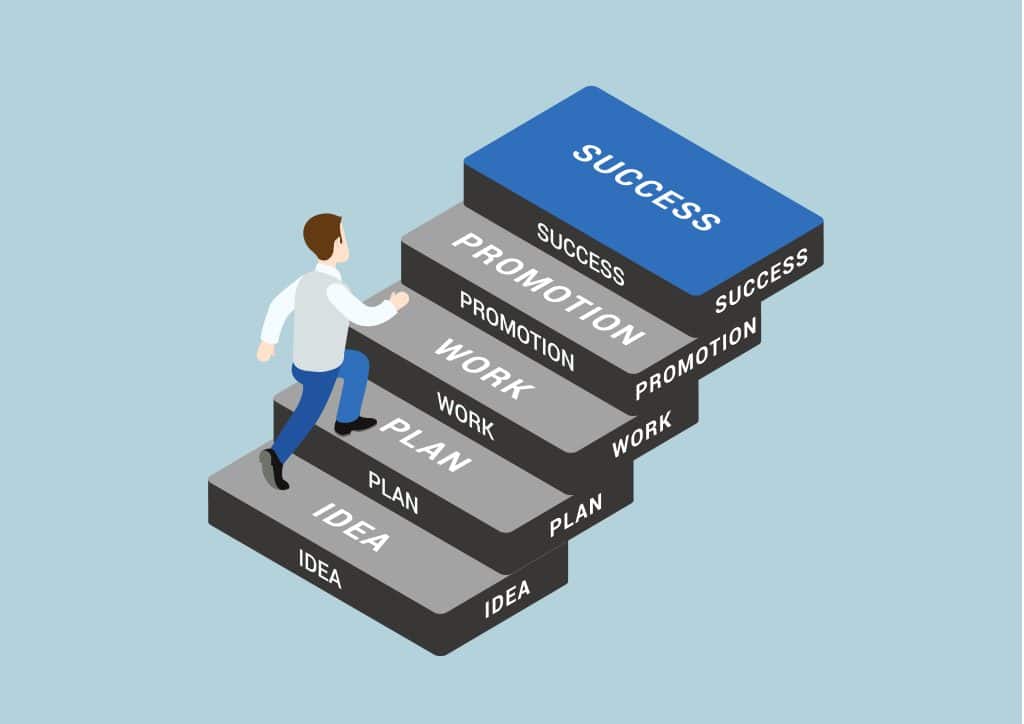
Below is a guide you can follow. Think of it as scaffolding—over time, you’ll rely on less structure and more internal belief.
Step 1: Establish Micro Wins
Break down your bold vision into tiny tasks you can complete quickly.
- Example: write a single hypothesis you want to test, send one outreach email, sketch one slide.
- Each completed task—even imperfect—is proof you can act.
Accumulating micro wins builds momentum and internal trust.
Step 2: Use AI Scaffolds as Beta Mentors
When tools let you test ideas, get draft feedback, or simulate consequences, they act as cognitive support.
- Use AI to generate outlines, suggest pivot ideas, draft messaging, or simulate buyer objections.
- Use scaffolded systems for business planning that guide you step by step.
Importantly: always review, revise, and question the tool’s output—don’t blindly follow it.
Step 3: Share Early, Seek Feedback & Iterate
Don’t wait until your “perfect” product. Share early (even rough prototypes) with trusted users or peers.
- Ask specific questions (What’s confusing? What would you change?)
- Use feedback to iterate, not to paralyze.
Feedback turns uncertainty into data, and helps calibrate your next steps.
Step 4: Build a Confidence Routine
Confidence needs maintenance. You can build a daily or weekly routine:
- Journal three small wins you achieved
- Visualize your next risk point and rehearse how you’ll handle it
- Rehearse short pitches, handle objections out loud
- Remind yourself of past difficulties you overcame
Repetition, rehearsal, and reflection strengthen belief over time.
Step 5: Surround Yourself with Supportive Networks
Confidence is social too. Engage peers, mentors, or mastermind groups:
- Share struggles openly
- Share progress, even small
- Get encouragement, alternative views, and social proof
Seeing others do it under similar conditions boosts your own belief.
Step 6: Track Progress Quantitatively
Create a simple dashboard:
- Number of tasks completed
- Iterations made
- Conversations held
- Feedback applied
Weekly review helps you see forward movement even when overnight leaps aren’t visible.
Step 7: Normalize Failure as Experimentation
Every “failure” is data. Treat decisions as experiments—not existential judgments.
- Ask “What did I learn?”
- Reset, pivot, or iterate.
Over time, your tolerance for ambiguity and error grows—and that tolerates stronger confidence.
How to Sequence These Steps Over 8 Weeks
Here’s a sample progression:
- Weeks 1–2: Focus heavily on Step 1 (micro wins). Use scaffolded AI support to overcome friction.
- Weeks 3–4: Add Step 3 (sharing & feedback) and Step 5 (networking). Get early external input.
- Weeks 5–6: Add Step 4 (confidence routine) and Step 6 (tracking).
- Weeks 7–8: Reframe failures as experiments, iterate the cycle.
- Then reboot: refine your tasks, repeat the micro wins cycle, and build upward.
Over successive cycles, you rely less on scaffolding and more on your internal sense of competence.
Pitfalls to Watch Out For & How to Mitigate Them
- Overconfidence traps: Boosting confidence too fast without grounding in competence can lead to blind spots. Studies of overconfidence in solo entrepreneurs highlight this risk.
- Overreliance on AI: Tools can err. Treat AI output as draft, not decree.
- Feedback overload: Too much critique can paralyze—filter and prioritize.
- Isolation: Doing everything by yourself without external perspective can weaken confidence in blind spots.
- Confidence collapse when setbacks occur: even the confident stumble. Be ready to cycle back into smaller steps and rebuild.
Confidence is not static—it must be maintained.
Why This Approach Works & Why Now
- The rise of AI scaffolding reduces friction and gives solo founders tools that historically required teams. This lowers the barrier to acting.
- Empirical research confirms that self-efficacy is central to entrepreneurial intention and performance.
- Evidence shows that generative AI in entrepreneurship education increases self-efficacy and intention.
- In volatile environments, confidence enables flexibility, risk taking, resilience, and consistent action under ambiguity.
- With many founders working alone or in lean teams, scaffolding support systems help personality limitations matter less than strategy and consistency.
Concluding Thoughts
Confidence is not magic. It is built through small actions, reflection, feedback, and smart scaffolding. In 2025, as AI tools and scaffold systems become more available, you can accelerate your confidence growth—but only if you remain active and critical in your process.
To build entrepreneurial confidence, follow a cycle: micro wins, scaffolded action, feedback, routine, network, tracking, and reframing failure. Repeat. Over time, what was fragile becomes more stable—and you move from doubt to doing.
References
- AI literacy and e-entrepreneurial intention- https://www.sciencedirect.com
- Generative artificial intelligence in entrepreneurship- https://www.nature.com
- Journal of Small Business and Enterprise Development- https://www.emerald.com

 Wellness Routines That Encourage Mindful Living