Wellness Routines That Boost Productivity
Sofia Alvarez September 30, 2025
In the modern workplace, productivity is no longer measured simply by how many hours you spend at a desk. Instead, it is increasingly tied to how well you manage your energy, focus, and recovery. While the old approach often pushed people toward longer hours and endless multitasking, a growing body of evidence shows that wellness routines boost productivity far more effectively than sheer effort alone.
In 2025, two particular trends are reshaping how individuals and organisations approach performance: sleepmaxxing, the art of maximising sleep quality for sharper daytime focus, and AI-driven micro wellness breaks, short but intelligent pauses guided by personalised technology. Together, they represent a shift toward sustainable high performance — productivity that doesn’t burn you out, but sustains you for the long term.
Why Traditional Wellness Routines Are No Longer Enough
For years, the conversation around wellness in the workplace centred on broad recommendations like “take a walk,” “stay hydrated,” or “try mindfulness.” While helpful, these approaches often lacked the precision and personalisation needed to truly stick. Employees either ignored them or struggled to apply them consistently in busy schedules.
The problem was not the advice itself, but the delivery. A wellness routine that doesn’t align with your biology, schedule, or work context rarely becomes habit. For productivity to improve, routines must be personalised, easy to integrate, and responsive to real-time needs. This is why emerging practices like sleepmaxxing and AI-guided micro breaks are gaining so much traction — they are designed to adapt to you, not the other way around.
Trend 1: Sleepmaxxing — Turning Sleep Into a Performance Tool
What Is Sleepmaxxing?
Sleepmaxxing is a growing trend focused on optimising every aspect of your nightly rest. It combines traditional sleep hygiene practices with modern data tracking and environmental adjustments to make sure the hours you spend asleep deliver the maximum restorative value.
Instead of simply aiming for “eight hours of sleep,” sleepmaxxing looks at factors such as:
- Circadian rhythm alignment: sleeping and waking at times that match your body’s natural rhythm.
- Environmental optimisation: adjusting light, temperature, sound, and air quality to promote deeper rest.
- Pre-sleep rituals: structured wind-down activities like light stretching, journaling, or breathing exercises to calm the nervous system.
- Smart tracking: using wearables or sleep apps to monitor heart rate variability, deep sleep, and REM cycles.
- Micro-adjustments: small tweaks to bedtime, room setup, or evening habits based on data feedback.
Why Sleepmaxxing Boosts Productivity
The link between sleep and productivity is undeniable. Sleep affects memory consolidation, focus, decision-making, emotional regulation, and physical energy. Even modest improvements in sleep quality can translate to sharper thinking and better output during the day.
When you engage in sleepmaxxing, you’re not just resting — you’re deliberately fuelling your brain and body for peak performance. A well-rested professional is more creative, less prone to mistakes, and far better at sustaining deep focus for long stretches of time.
How to Start Sleepmaxxing
- Fix your wake time — Consistency is more important than duration. Choose a wake-up time and stick to it every day.
- Create a buffer zone — Spend the last hour before bed away from screens, focusing on calm, restorative activities.
- Adjust your sleep environment — Keep your bedroom cool, dark, and quiet. Small tweaks like blackout curtains or white noise can have a big effect.
- Monitor and iterate — Use sleep tracking as a guide, but avoid obsessing over numbers. Look for patterns and gradual improvements.
- Prioritise quality, not just hours — Focus on how refreshed you feel in the morning rather than simply aiming for longer sleep.
Trend 2: AI-Driven Micro Wellness Breaks
What Are Micro Wellness Breaks?
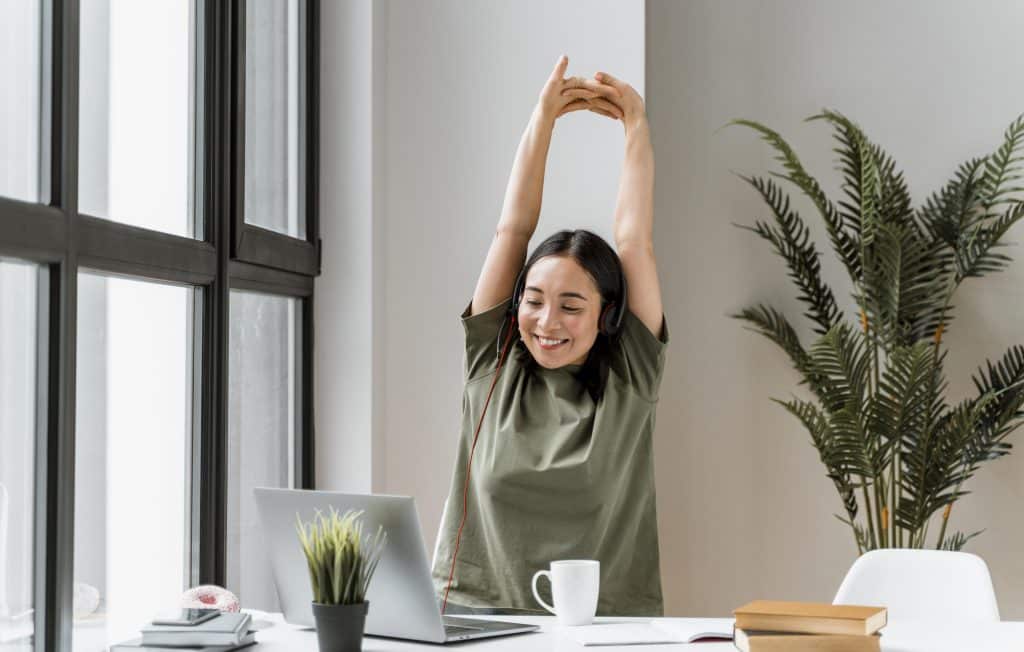
Micro wellness breaks are brief pauses throughout the day — often lasting between 30 seconds and three minutes — that help restore focus and energy. They can be as simple as a breathing exercise, a posture reset, or closing your eyes for visual rest.
What makes the 2025 version of this practice different is the integration of artificial intelligence. AI-driven systems, whether built into your wearable, computer, or workplace platform, can now track your behaviour and prompt wellness activities at the exact moments you need them most.
For example:
- After 45 minutes of continuous typing, you might receive a gentle nudge to stretch your shoulders and adjust your posture.
- If your heart rate variability signals stress, an app could guide you through a short breathing exercise.
- During late afternoon energy dips, your system might recommend a 90-second walk to reset circulation.
Why Micro Breaks Boost Productivity
The science behind micro-breaks is clear: the brain and body are not designed for continuous strain. Even short, strategic pauses can:
- Reduce mental fatigue by resetting focus.
- Lower physical strain by relieving tension and improving circulation.
- Enhance creativity by giving your subconscious space to process ideas.
- Prevent burnout by regulating stress before it spirals out of control.
By embedding these breaks into your workflow, you maintain productivity throughout the day instead of experiencing steep declines after long work stretches.
How to Use AI-Driven Micro Breaks
- Choose a prompting tool — Use a wearable, an app, or an AI assistant that integrates with your daily workflow.
- Set thresholds — For example, prompt a break after every 45–60 minutes of work.
- Diversify your breaks — Rotate between stretches, eye resets, deep breathing, or short walks.
- Personalise frequency — Adjust prompts to match your energy patterns and workload.
- Track impact — Notice how you feel before and after breaks. Adjust until the rhythm feels natural.
A Daily Blueprint: Combining Sleepmaxxing and Micro Breaks
Here’s an example of how these two routines can come together to form a powerful daily flow where wellness routines boost productivity consistently:
- 6:30 a.m. — Wake with natural light or soft alarm to anchor circadian rhythm.
- 7:00 a.m. — Light movement, hydration, and mindful breathing.
- 8:00 a.m. — Begin deep work session.
- 8:50 a.m. — AI micro-break: 60-second stretch and breathing reset.
- 10:30 a.m. — Posture reset and eye relief exercise prompted by wearable.
- 12:30 p.m. — Lunch and 10-minute outdoor walk.
- 2:30 p.m. — Afternoon micro-break: short desk stretch and hydration reminder.
- 4:30 p.m. — Quick tension release and 90-second breathing practice.
- 9:30 p.m. — Wind-down ritual: journaling, dim lights, tech-free environment.
- 10:00 p.m. — Consistent bedtime, with sleepmaxxing strategies applied.
The result? More focus during work hours, less fatigue at the end of the day, and stronger recovery overnight.
The Evidence Behind These Routines
- Studies on micro-breaks show that even pauses of less than three minutes can significantly improve mental clarity and reduce stress.
- Sleep optimisation research consistently demonstrates a link between quality rest and improved executive function, memory, and emotional stability.
- Early trials of AI-driven wellness interventions suggest they increase consistency in healthy behaviour, as prompts arrive when they are most relevant rather than at arbitrary times.
Taken together, the evidence suggests that these emerging wellness practices are not just trends but practical tools for sustaining long-term productivity.
Pitfalls to Avoid
While these routines are powerful, there are common mistakes to avoid:
- Too many prompts — Frequent reminders can feel disruptive instead of helpful. Start small.
- Over-optimising sleep — Trying too hard to perfect sleep can create stress and paradoxically worsen rest.
- Rigidity — Allow flexibility. Life events, meetings, and travel will occasionally override routines.
- Neglecting fundamentals — Remember, micro-breaks can’t replace real rest. Sleep is still the foundation.
The Future of Wellness and Productivity
Looking ahead, wellness routines are likely to become even more personalised and integrated into our daily systems. We can expect:
- Predictive AI cues that suggest breaks before fatigue sets in.
- Adaptive workplaces where lighting, temperature, and sound adjust to support focus and recovery.
- Team-based wellness practices where entire groups synchronise micro-breaks to build collective rhythms.
- Sleep-aware calendars that schedule deep work sessions based on your recovery score from the previous night.
The line between wellness and productivity is blurring. Rather than viewing self-care as separate from work, it is becoming clear that the two are inseparable.
Conclusion
In 2025, the most effective path to sustained productivity is not working harder, but working smarter through wellness integration. Practices like sleepmaxxing and AI-driven micro wellness breaks are proving that when you take care of your body and mind in structured, intentional ways, your performance naturally improves.
By focusing on recovery at night and strategic resets during the day, these routines create a rhythm where energy, focus, and creativity flow more naturally. Over time, they turn productivity from a stressful push into a sustainable habit.
If you’re looking to elevate your output without sacrificing well-being, start small: improve your sleep quality by just 10% and add two or three micro wellness breaks into your day. You may be surprised at how quickly your clarity, focus, and resilience improve.
References
- Why Traditional Wellness Is Not Enough Anymore- https://www.wellsteps.com
- Sleepmaxxing — Optimize Every Minute of Rest- https://en.wikipedia.org
- AI-Driven Micro Wellness Breaks- https://www.plusoneworkplacewellbeing.com

 Gardening Practices That Support Sustainability